The End of Undetectable AI Text? Claude’s New Watermark Explained: What's Actually Changing
AI text watermarking is moving from research paper to shipped feature. Here's what that actually changes for teams building products on top of AI-generated content - and what it doesn't.
Elemantic Solutions
Written by Elemantic Solutions' engineering team, tracking developments relevant to AI-assisted product work.
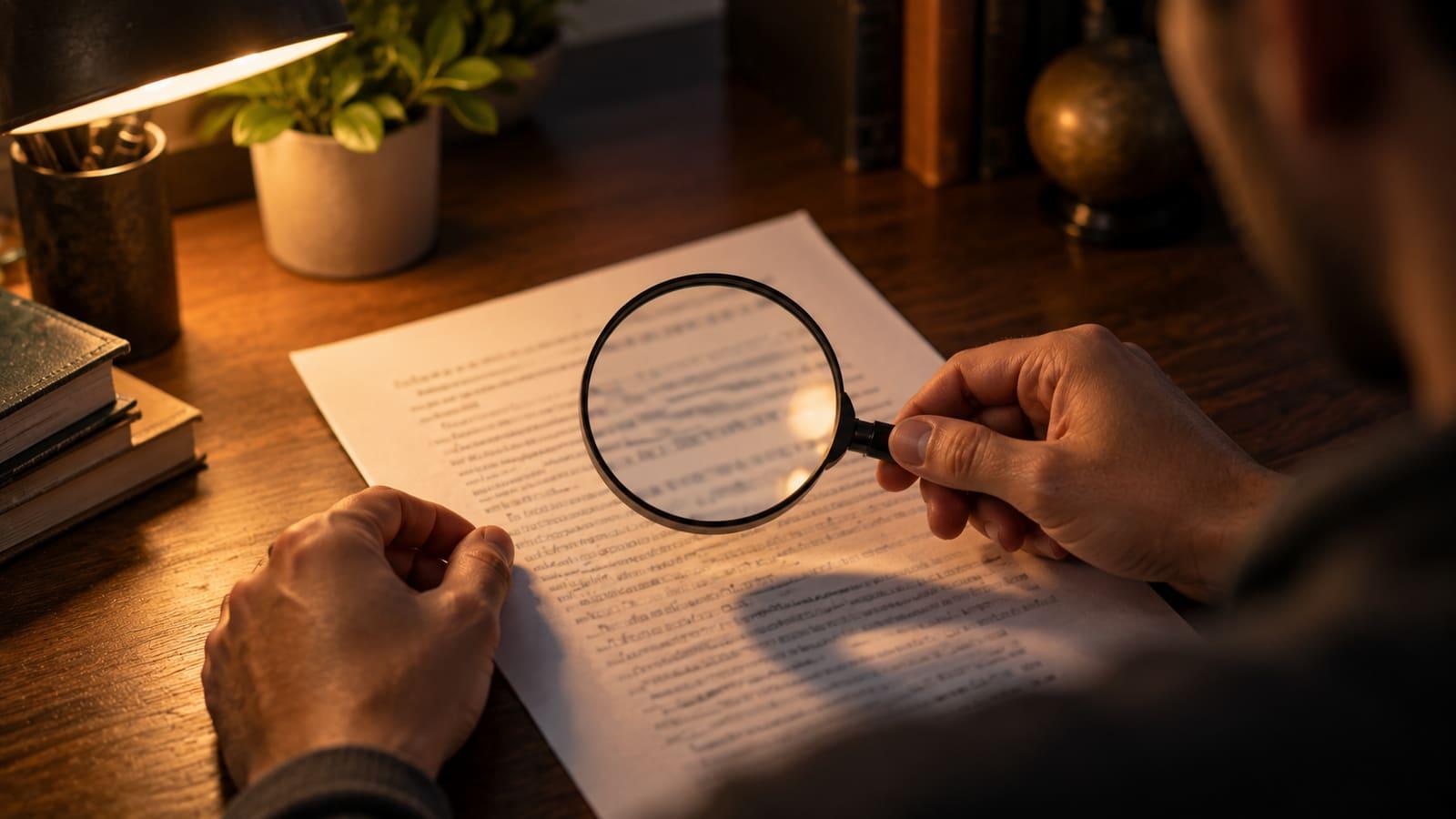
Model providers have spent the last two years selling how convincingly their output passes for human writing. Increasingly, they're also shipping ways to prove it didn't. Text watermarking - quietly embedding a detectable statistical pattern into generated output - is moving from research paper to production feature, and that shift changes what "AI-generated content" means for any product that ships it, summarizes it, or moderates it.
What watermarking actually is
Text watermarking doesn't add visible marks, metadata, or a signature line. It works by subtly biasing which words a model picks at each step of generation - a pattern invisible to a human reader but statistically detectable by a matching checker. The output reads exactly the same as before. What changes is that a provider (or anyone with the checking tool) can now test whether a given block of text was likely produced by their model, without relying on the guesswork that today's "AI detector" tools are notoriously bad at.
That's a meaningfully different claim than "we can detect AI text." It's closer to "we can verify text that came from our model," under specific conditions - and those conditions matter more than the headline.
Why it matters for product and engineering leads
If you're shipping AI-generated content anywhere in your product - drafts, summaries, support replies, generated marketing copy - watermarking changes the assumptions you can safely make about that content downstream:
- Provenance checks become a real option, not just a policy statement. A platform can plausibly ask "was this AI-written?" of any single piece of text and get a probabilistic answer, not just a disclosure checkbox the author may or may not have ticked.
- Editing and paraphrasing degrade the signal. Watermark detection is a statistical test, not a hash - substantial rewriting, translation, or running text through a second model weakens or removes it. Teams evaluating this shouldn't assume it survives a normal editing pipeline.
- It's model- and provider-specific. A watermark only proves text plausibly came from that provider's model, with that feature enabled, on that version. It says nothing about text from any other model, and it won't retroactively apply to content already generated.
None of that makes watermarking a compliance shortcut. It makes it one more signal - useful for spot-checking policy violations, far less useful as evidence in anything adversarial.
What to actually do about it
Don't build anything today that assumes watermark detection as a guaranteed control. If your product policy depends on distinguishing AI-authored from human-authored content - for moderation, academic integrity, or disclosure requirements - treat detection as probabilistic evidence to combine with other signals, not a binary answer you can act on alone. If you're evaluating AI vendors for a use case where provenance genuinely matters, ask directly whether watermarking is on by default, whether it survives your typical editing workflow, and whether there's a public checking tool or only an internal one - the answers vary a lot between providers today, and "the feature exists somewhere" isn't the same as "the feature covers your use case."
What's still unclear
How durable these watermarks are against determined removal, how detection accuracy holds up on short text (a sentence gives a checker far less signal than a full article), and whether watermarking becomes a real industry standard or stays a per-provider feature with no cross-model interoperability are all open questions. Teams building anything that depends on this working reliably at scale should treat it as an evolving capability, not a settled one.
Evaluating or building an AI-powered product feature?
Talk to Elemantic